 skip to Main Content

NEWSROOM
Our Latest Updates

BCRFA Welcomes New Board Members in 2026
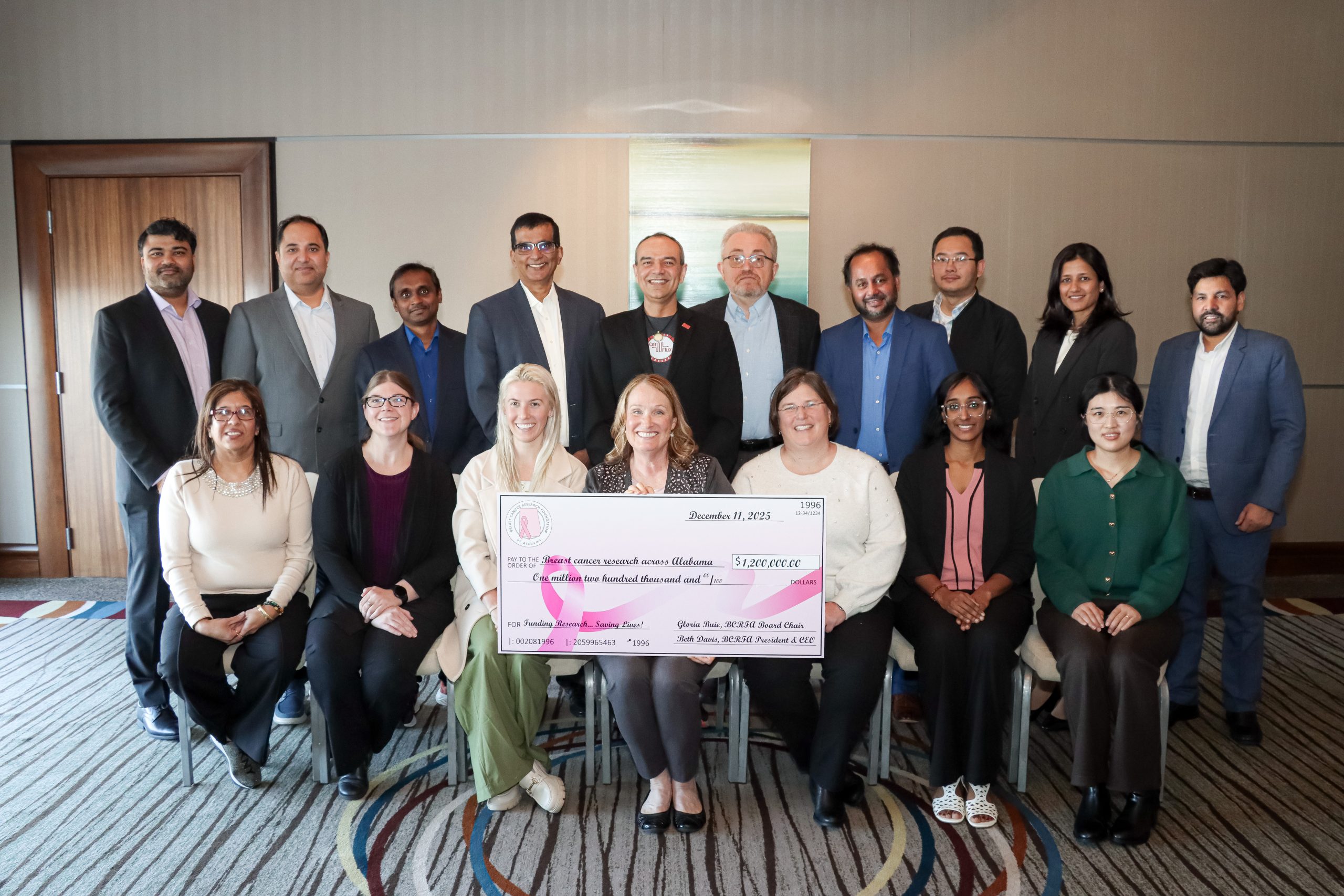
$1.2 Million Investment Will Advance Lifesaving Breast Cancer Research

BCRFA funds two breast cancer research grants at UAB’s O’Neal Comprehensive Cancer Center

Bolt For Breast Cancer 5K and Fun Run Returned with over $51K Raised for Breast Cancer Research

Revvin’ 4 Research marks 17th anniversary, raising over $16K

Alabama firefighters battle breast cancer and fires with the Pink Ribbon Project
RECENTLY FUNDED RESEARCH
Thanks to generous supporters like you, the BCRFA invested $1.2 million in 25 breast cancer research projects at 9 institutes across the state in 2025.
Birmingham


Communication of next-generation sequencing (NGS) results in women’s cancer care
Nicole Henderson, PhD
Read More
This study focuses on how doctors explain complex genetic test results to patients with breast cancer. These tests, called next-generation sequencing (NGS), can help guide treatment choices, but the reports are often hard to understand. We will record real clinic visits of oncologists going over these reports with patients, interview patients afterward, and review test reports to learn what causes confusion and what helps people feel informed. The goal is to make sure all patients, especially those in Alabama and the Deep South, can understand and use this information to choose the treatment that is best for them. What we learn will help improve how genetic test results are shared, so every patient can feel confident making decisions about their care.

Validation and rapid detection of calreticulin as a cancer biomarker
Benjamin Larimer, PhD
Read More
In 2025, cancer is expected to kill over 618,000 Americans, making it the second leading cause of death in the country. This highlights the urgent need for new ways to detect cancer. A biomarker detectable in patients’ blood could increase the chances of proper cancer diagnosis. One potential target as a biomarker is a protein called Calreticulin. Calreticulin normally resides inside cells, but moves to the cell surface under certain conditions, such as stress caused by chemotherapy. After getting to the cell surface, a portion of Calreticulin is then released into the surrounding environment. Thus, Calreticulin in the blood might be a useful cancer biomarker for the detection of several cancers. Our study aims to understand the process and the conditions under which Calreticulin is secreted and detectable in the blood. We will also develop a highly sensitive method for Calreticulin detection using an innovative nanosensor. This sensor could help identify which patients might benefit from follow up studies. We showed that treating cancer cells with doxorubicin induces Calreticulin to move to the cell surface and be released, and we believe that our sensor will be able to detect Calreticulin in the blood. To achieve the aims of our study, we will first study how Calreticulin moves within live cancer cells and how it is released, using advanced imaging techniques. Next, we will measure Calreticulin levels in the blood of healthy individuals and patients with breast cancer (pre- and post-chemotherapy). In parallel, we will develop and refine our sensor to ensure it can accurately detect Calreticulin in blood samples. This research could lead to a new way of detecting cancer markers, particularly for pancreatic, colorectal, and breast cancers. Nanosensors could be used in portable devices enabling rapid and local diagnosis by doctors to identify patients who might benefit from more specific follow-up studies and early targeted treatments.

Targeting BMX kinase to reverse endocrine therapy resistance in ER+/HER2- breast cancer
Xiuxiu Li, PhD
Read More
This study focuses on how doctors explain complex genetic test results to patients with breast cancer. These tests, called next-generation sequencing (NGS), can help guide treatment choices, but the reports are often hard to understand. We will record real clinic visits of oncologists going over these reports with patients, interview patients afterward, and review test reports to learn what causes confusion and what helps people feel informed. The goal is to make sure all patients, especially those in Alabama and the Deep South, can understand and use this information to choose the treatment that is best for them. What we learn will help improve how genetic test results are shared, so every patient can feel confident making decisions about their care.

Validation and rapid detection of calreticulin as a cancer biomarker
Michael Niederweis, PhD
Read More
In 2025, cancer is expected to kill over 618,000 Americans, making it the second leading cause of death in the country. This highlights the urgent need for new ways to detect cancer. A biomarker detectable in patients’ blood could increase the chances of proper cancer diagnosis. One potential target as a biomarker is a protein called Calreticulin. Calreticulin normally resides inside cells, but moves to the cell surface under certain conditions, such as stress caused by chemotherapy. After getting to the cell surface, a portion of Calreticulin is then released into the surrounding environment. Thus, Calreticulin in the blood might be a useful cancer biomarker for the detection of several cancers. Our study aims to understand the process and the conditions under which Calreticulin is secreted and detectable in the blood. We will also develop a highly sensitive method for Calreticulin detection using an innovative nanosensor. This sensor could help identify which patients might benefit from follow up studies. We showed that treating cancer cells with doxorubicin induces Calreticulin to move to the cell surface and be released, and we believe that our sensor will be able to detect Calreticulin in the blood. To achieve the aims of our study, we will first study how Calreticulin moves within live cancer cells and how it is released, using advanced imaging techniques. Next, we will measure Calreticulin levels in the blood of healthy individuals and patients with breast cancer (pre- and post-chemotherapy). In parallel, we will develop and refine our sensor to ensure it can accurately detect Calreticulin in blood samples. This research could lead to a new way of detecting cancer markers, particularly for pancreatic, colorectal, and breast cancers. Nanosensors could be used in portable devices enabling rapid and local diagnosis by doctors to identify patients who might benefit from more specific follow-up studies and early targeted treatments.

WISE Remote Symptom Monitoring for Breast Cancer Survivors: Wearable Integration for Sleep Enhancement
Gabrielle Rocque, MD
Read More
Approximately half of patients with cancer experience sleep impairment, which is associated with lower health-related quality of life, increased depression risk, and worse survival in breast cancer. Due to the substantial prevalence (3x greater than the general population) and health implications of insomnia in patients with cancer, National Comprehensive Cancer Network (NCCN) Guidelines recommend routine screening for sleep difficulties, although in practice, systematic screening is often absent or inadequate. Remote symptom monitoring (RSM) using electronic patient-reported outcomes (ePROs) benefits patients with cancer on active treatment (i.e., improved symptom assessment efficiency, patient-clinician communication and satisfaction, symptom control and well-being, overall survival).
At O’Neal Comprehensive Cancer Center (O’Neal CCC), our team has successfully implemented ePRO RSM, enrolling more than 2,900 patients (94% of those approached) from 2021 to 2025, with a 19% reduction in hospitalizations at 3 months post-RSM enrollment (RR 0.81, 95% CI 0.73–0.91). Despite promising results, low sustained adherence and the limited amount of symptom information (e.g. no information on sleep) that can be feasibly captured through surveys limit RSM benefits. Passive data collection through wearable technology may strengthen RSM benefits by providing a more complete and continuous picture of patient health, without substantial patient and system burden. For example, the Oura Ring, which is approximately the size of a wedding band, provides detailed sleep metrics (e.g., sleep onset latency, time in sleep stages, sleep composite score), as well as information on temperature, lifestyle behaviors, and functional status (e.g., physical activity, stress). To our knowledge, this tool has not yet been combined with ePRO RSM in breast cancer, and holds promise for providing complimentary remote monitoring. For this proposal, we will leverage our unique existing RSM infrastructure within breast oncology at O’Neal CCC to test the integration of the Oura Ring for enhanced monitoring.

Validation and rapid detection of calreticulin as a cancer biomarker
Bart Rose, PhD
Read More
Our study aims to understand the process and the conditions under which Calreticulin is secreted and detectable in the blood. We will also develop a highly sensitive method for Calreticulin detection using an innovative nanosensor. This sensor could help identify which patients might benefit from follow up studies. We showed that treating cancer cells with doxorubicin induces Calreticulin to move to the cell surface and be released, and we believe that our sensor will be able to detect Calreticulin in the blood. To achieve the aims of our study, we will first study how Calreticulin moves within live cancer cells and how it is released, using advanced imaging techniques. Next, we will measure Calreticulin levels in the blood of healthy individuals and patients with breast cancer (pre- and post-chemotherapy). In parallel, we will develop and refine our sensor to ensure it can accurately detect Calreticulin in blood samples. This research could lead to a new way of detecting cancer markers, particularly for pancreatic, colorectal, and breast cancers. Nanosensors could be used in portable devices enabling rapid and local diagnosis by doctors to identify patients who might benefit from more specific follow-up studies and early targeted treatments.

Phase II single arm trial of low does capecitabine in patients with advanced breast cancer
Humaira Sarfraz, MD
Read More
Capecitabine has an important place in the treatment of metastatic breast cancer, but continues to carry significant toxicity in doses commonly used. Prospective data is needed to evaluate both efficacy and tolerability of a daily lower dose of the drug; which we aim to evaluate in this clinical trial at UAB. We aim to enroll 40 patients older than 60 years of age, or considered frail at any age, with metastatic or unresectable HER2 negative breast cancer, who have had disease progression on at least one line of therapy. The other major gap in knowledge this trial would help fill is addressing the benefit of lower dose of capecitabine in older adults and frail individuals, a population that is often under-represented in clinical trials. If a lower dose could be used with equivalent effectiveness and dramatically less toxicity, that would be a major advancement in quality of life, not only in breast cancer, but could extend to other cancers as well.

The Role of Biomechanical Regulation in Triple Negative Breast Cancer
Mary Kathryn Sewell-Loftin, PhD
Read More
Triple negative breast cancer is aggressive with a low survival rate after the disease spreads. Our studies will focus on how mechanical forces drive cancer cell growth, movement, and response to drugs. Results will help develop novel treatment strategies to block mechanical regulation of tumor growth.

WISE Remote Symptom Monitoring for Breast Cancer Survivors: Wearable Integration for Sleep Enhancement
Read More
Approximately half of patients with cancer experience sleep impairment, which is associated with lower health-related quality of life, increased depression risk, and worse survival in breast cancer. Due to the substantial prevalence (3x greater than the general population) and health implications of insomnia in patients with cancer, National Comprehensive Cancer Network (NCCN) Guidelines recommend routine screening for sleep difficulties, although in practice, systematic screening is often absent or inadequate. Remote symptom monitoring (RSM) using electronic patient-reported outcomes (ePROs) benefits patients with cancer on active treatment (i.e., improved symptom assessment efficiency, patient-clinician communication and satisfaction, symptom control and well-being, overall survival).
At O’Neal Comprehensive Cancer Center (O’Neal CCC), our team has successfully implemented ePRO RSM, enrolling more than 2,900 patients (94% of those approached) from 2021 to 2025, with a 19% reduction in hospitalizations at 3 months post-RSM enrollment (RR 0.81, 95% CI 0.73–0.91). Despite promising results, low sustained adherence and the limited amount of symptom information (e.g. no information on sleep) that can be feasibly captured through surveys limit RSM benefits. Passive data collection through wearable technology may strengthen RSM benefits by providing a more complete and continuous picture of patient health, without substantial patient and system burden. For example, the Oura Ring, which is approximately the size of a wedding band, provides detailed sleep metrics (e.g., sleep onset latency, time in sleep stages, sleep composite score), as well as information on temperature, lifestyle behaviors, and functional status (e.g., physical activity, stress). To our knowledge, this tool has not yet been combined with ePRO RSM in breast cancer, and holds promise for providing complimentary remote monitoring. For this proposal, we will leverage our unique existing RSM infrastructure within breast oncology at O’Neal CCC to test the integration of the Oura Ring for enhanced monitoring.

Evaluation of ATPase TRIP13 as biomarker in breast cancers and investigation of its functions
Sooryanarayana Varambally, PhD
Read More
For women in the United States and worldwide, breast cancer is a leading cause of cancer mortality. Progress in biotechnology for analyzing the cancer genome and proteome has identified various molecular alterations during breast cancer initiation and progression, which helps in the diagnosis and personalized therapy for cancer patients. To understand how breast cancer develops and the functions of the molecules involved, we used bioinformatic analysis to identify biomarkers for breast cancers. We focused on triple-negative breast cancers (TNBCs), which are an aggressive and heterogeneous set of tumors with a limited number of targetable genomic aberrations. Using UALCAN and MammOnc-DB ([https://ualcan.path.uab.edu], [https://resource.path.uab.edu/MammOnc-Home.html], two platforms that we have developed with the support of BCRFA funding, for comprehensive analysis of cancer proteogenomic and epigenetic big data. These are now used by cancer researchers around the world.) In breast cancer, we identified TRIP13, an AAA ATPase enzyme, as a potential driver gene that can be targeted with the small molecule inhibitor DCZ0415. Our analysis found that about 35% of metastatic breast cancers showed more TRIP13 gene copies compared to normal breast cells, suggesting that it is a cancer-causing gene. Our gene expression analysis of TRIP13-modulated cells showed that the tumor and metastasis suppressor gene, ITIH5, is negatively regulated by TIRP13 and that its expression is low in breast cancers, in which TRIP13 is high.
Based on our findings and preliminary data, we propose to test the hypothesis that TRIP13 is a driver oncogene that promotes breast cancer initiation and progression. Thus, with the current funding support from BCRFA, we will evaluate, in Aim 1, the role of TRIP13 in transforming breast epithelial cells and elucidate the role of TRIP13 in tumor progression. In Aim 2, we will characterize the expression and prognostic utility of TRIP13 and ITIH5 in breast cancer.
At O’Neal Comprehensive Cancer Center (O’Neal CCC), our team has successfully implemented ePRO RSM, enrolling more than 2,900 patients (94% of those approached) from 2021 to 2025, with a 19% reduction in hospitalizations at 3 months post-RSM enrollment (RR 0.81, 95% CI 0.73–0.91). Despite promising results, low sustained adherence and the limited amount of symptom information (e.g. no information on sleep) that can be feasibly captured through surveys limit RSM benefits. Passive data collection through wearable technology may strengthen RSM benefits by providing a more complete and continuous picture of patient health, without substantial patient and system burden. For example, the Oura Ring, which is approximately the size of a wedding band, provides detailed sleep metrics (e.g., sleep onset latency, time in sleep stages, sleep composite score), as well as information on temperature, lifestyle behaviors, and functional status (e.g., physical activity, stress). To our knowledge, this tool has not yet been combined with ePRO RSM in breast cancer, and holds promise for providing complimentary remote monitoring. For this proposal, we will leverage our unique existing RSM infrastructure within breast oncology at O’Neal CCC to test the integration of the Oura Ring for enhanced monitoring.
MammOnc-DB: Expansion of a comprehensive breast cancer platform for data analysis, integration and visualzation
Sooryanarayana Varambally, PhD
Read More
Breast cancer is one of the most common cancers in women and a leading cause of cancer related death. Recent technological advances enabled sequencing of thousands of breast cancer tissues to identify genomic and proteomic changes during breast cancer progression. To identify the druggable target genes and protein from tens of thousands of breast cancer patients’ molecular data and to target them by cancer researchers across the world, a comprehensive bioinformatics tool is needed. In the era of precision medicine, researchers and clinicians must be able to identify candidate BC subclass-specific cancer biomarkers for early diagnosis, prediction of disease recurrence, identification of molecular determinants for therapeutic targeting, therapy resistance and to repurpose drugs.
In order to develop a dedicated, state of the art, integrative breast cancer data analysis and visualization tool, we developed a dynamic, one of a kind, unique multi-omic platform dedicated to breast cancer molecular data called MammOnc-DB (https://resource.path.uab.edu/MammOnc-Home.html). The focus of this proposal will be on collection, curation, analysis and sharing of large number of additional breast cancer whole tissue pre-and post-treatment data, single cell sequencing data, and proteomics data. Providing an easy-to-use platform in a user-friendly manner will enable researchers to perform analysis and will provide an understanding of BC initiation programs, the disease progression mechanisms, help identify prognostic biomarkers and valuable therapeutic targets.

Synergestic antitumor effect of combined EZH2 and aurora kinases inhibition in triple-negative breast cancer
Jia Xu. MD
Read More
Triple-negative breast cancer is a fast-growing and hard-to-treat type of breast cancer. An epigenetic factor called EZH2 helps these cancer cells grow, but medicines that target it haven’t worked well on their own. In our study, we found that when we used drugs to block both EZH2 and another protein regulating cell division at the same time, the treatment worked much better and killed more cancer cells. This discovery could lead to a new and more effective treatment option for patients with this challenging form of breast cancer.
Mobile


WnK1 and matrix stiffness: exploring a novel axis in breast cancer progression
Debanjan Chakroborty, PhD
Read More
The change in paradigm from a cancer cell-centric approach to a tumor-supporting, non-cancer cell-centric approach in treating cancers has revolutionized cancer treatment in recent times and improved the patient’s quality of life in several ways. Breast cancer (BC) is a complex disease that is often identified with the presence of hardened mass or tissue. It results from an overabundance of non-cellular components called extracellular matrix (ECM), primarily collagen, fibronectin, and matrix cross-linkers, and predicts poorer disease and therapeutic outcomes in patients. The ECM imparts a gradual elastic force to the cancer cells, known as matrix stiffness, which alters the cancer cell biology and promotes metastatic progression. Manipulation of cancer tissue stiffness is envisioned as a major strategy for improvement in cancer therapeutics. The current study will identify the role of lysine-deficient kinase 1(WNK1), which is abundantly expressed in cancer-associated fibroblasts (CAFs), the most prominent non–cancer cell population in BC TME and the primary depositor of ECM, on matrix stiffness in BC.

Investigating the role of WNT7b in triple-negative breast cancer progression
Prabhat Suman, PhD
Read More
Metastasis, or the ability of cancer cells to spread to other regions of the body, is the deadliest aspect of breast cancer. Our study focuses on WNT7b protein, a potential facilitator of the process. Our research indicates that the WNT7b protein is particularly active in more aggressive types of breast cancer, including triple-negative breast cancer. The current study will investigate how WNT7b affects tumor growth and test whether reducing its activity will slow or stop the spread of cancer cells. Understanding the mechanism of action of this protein could lead us to develop novel treatments, thereby improving disease prognosis.
Auburn


Concomitant use of acai botanical dietary supplements with anticancer drug produces vascular adverse events in breast cancer patients: An in vitro assessment
Angela Calderon, PhD
Read More
Cancer patients, especially those with breast cancer, often use botanical dietary supplements (BDS) like açaí alongside their prescribed treatments. Our previous research found that this combination can lead to serious, sometimes life-threatening side effects—particularly affecting the heart and blood vessels. Açaí (Euterpe oleracea), one of the most popular botanicals in the U.S., has been linked to cardiovascular adverse events when taken with chemotherapy drugs.
This project aims to understand how açaí interacts with breast cancer medications to cause these harmful effects. We will use lab-based (in vitro) models to test how açaí extracts affect heart, mammary, and blood vessel cells when combined with common cancer drugs like methotrexate and cisplatin. We will look for signs of cell damage, death, and stress responses.
In addition, we will use advanced chemical analysis (mass spectrometry and chemometrics) to identify which compounds in açaí can enter cells and potentially trigger these dangerous interactions. This will help pinpoint the specific ingredients responsible for the side effects.
Our team brings expertise in natural products, cancer therapy, cardiovascular biology, statistics, and chemical analysis. The results will provide early warning signs of harmful supplement-drug interactions and guide safer treatment decisions for breast cancer patients. This work will also lay the foundation for a future NIH R01 grant to study these effects in animal models and further explore the safety of açaí in breast cancer care.

Novel antibody-drug conjugates for the treatment of triple-negative breast cancer
Rashad Karimov, PhD
Read More
We seek to develop a novel, revolutionary treatment for the deadliest form of breast cancer, called triple-negative breast cancer (TNBC), which cannot be treated my such commonly used breast cancer treatment as tamoxifen and Herceptin. Proteasome inhibitor (PIs) bortezomib (Velcade), which is approved by the FDA for the treatment of multiple myeloma, a bone marrow cancer, is more effective in killing cells derived from TNBC in a Petri dish than any of the chemotherapy drugs that are approved for the treatment of these tumors. Antibody-drug conjugates are a rapidly expanding type of anti-cancer agents, which selectively target various potent anti-cancer drugs to tumors. We propose to conjugate bortezomib to an antibody Sacituzumab, which is used clinically to deliver another anti-cancer drug, govitecan, to TNBC tumors, and to test the resulting conjugates in an animal model of TNBC.

Novel antibody-drug conjugates for the treatment of triple-negative breast cancer
Alexei Kisselev, PhD
Read More
We seek to develop a novel, revolutionary treatment for the deadliest form of breast cancer, called triple-negative breast cancer (TNBC), which cannot be treated my such commonly used breast cancer treatment as tamoxifen and Herceptin. Proteasome inhibitor (PIs) bortezomib (Velcade), which is approved by the FDA for the treatment of multiple myeloma, a bone marrow cancer, is more effective in killing cells derived from TNBC in a Petri dish than any of the chemotherapy drugs that are approved for the treatment of these tumors. Antibody-drug conjugates are a rapidly expanding type of anti-cancer agents, which selectively target various potent anti-cancer drugs to tumors. We propose to conjugate bortezomib to an antibody Sacituzumab, which is used clinically to deliver another anti-cancer drug, govitecan, to TNBC tumors, and to test the resulting conjugates in an animal model of TNBC.

Mitigating doxorubicin-induced cognitive impairment: targeting glutamate modulation to preserve synaptic plasticity and memory
Miranda Reed, PhD
Read More
This study examines “chemobrain,” a condition in which individuals receiving chemotherapy for breast cancer frequently experience long-lasting cognitive impairments, including memory deficits. The research investigates the effects of the chemotherapeutic agent doxorubicin, which contributes to these neurological complications by increasing glutamate, a neurotransmitter essential for memory. The researchers aim to evaluate novel drug interventions designed to prevent glutamate elevation after chemotherapy treatment, with the goal of preventing memory impairment without compromising the effectiveness of breast cancer treatment. If successful, these strategies have the potential to preserve cognitive function and enhance the quality of life for breast cancer survivors post-treatment.

Combining macrophage modulation, Pd-1 blockade, and 4-1BB agonism for TNBC therapy
Maninder Sandey, PhD
Read More
Triple-negative breast cancer (TNBC) is a highly aggressive form of breast cancer that is difficult to treat. This study explores a new treatment approach that combines two innovative therapies — one that enhances the immune system’s attack on cancer and another that reprograms immune cells within the tumor to fight cancer cells. By testing this combination in a mouse model that mimics human TNBC, we aim to develop a more effective and safe treatment for patients with this difficult-to-treat disease.
Montgomery


Bridging the gap: integrating genetic insights and fDA-approved Therapies to Revolutionize treatment for african American breast cancer
Parul Dubey, PhD
Read More
The study focuses on improving breast cancer treatment for African-American women by exploring their unique genetic traits. African-American women often face more aggressive breast cancer types, which are harder to treat due to limited targeted therapy. However, most research has been focused on women of European ancestry, which leaves a gap in understanding how genetics might influence treatment in African-American women. Therefore, by analyzing breast cancer tissue samples from African-American women, we aim to identify the genetic patterns related to breast cancer which will further be compared with the existing treatments approved by FDA to determine which therapies are most likely to work for these patients. This could lead to personalized treatment plans, improving outcomes and addressing health disparities in breast cancer care for African-American women.

Mechanistic analysis of alcohol-induced hormone dysregulation and oncogenesis in human 3D organoids
Sreelakshmi Krishnakumar, PhD
Read More
Alcohol consumption is a proven risk factor for breast cancer which accounts for an alarming 60% of alcohol induced cancer deaths in women, according to recent statistics. The breast is an endocrine responsive organ, therefore, hormonal imbalances can adversely affect normal breast tissue homeostasis and lead to the development of breast cancer. The mechanistic link between alcohol intake and altered hormonal levels that can contribute to breast tumor initiation remains underexplored to date. In this study, we aim to investigate the impact of alcohol exposure on hormonal dysregulation and its association with breast carcinogenesis, using state of the art 3D breast organoid models which mimic the complex structure and function of native breast tissue. Successful completion of the study can help identify specific molecular targets and early biomarkers of cancer associated with alcohol consumption to devise better strategies for prevention and therapy.

Nanostructured copper oxide aptasensor for noninvasive early detection of 8-oxo-dG in breast cancer diagnosis
Manoj Mishra, MSc, PhD
Read More
Breast cancer (BCa) is a major health concern, especially because it is often diagnosed late when treatment options are less effective. Early detection is crucial for improving treatment outcomes and reducing healthcare costs. While many methods for diagnosing BCa exist, they often have drawbacks, like being invasive, expensive, or requiring skilled personnel. This study proposes a new, non-invasive method for detecting breast cancer early using a biomarker called 8-oxo-dG, which is found in higher levels in the urine and blood of people with BCa. The goal is to develop a simple, quick, and affordable device that can detect this biomarker in urine samples, offering an easy way to monitor and diagnose BCa early.
Tuscaloosa


Tumor intrinsic regulation of brain metastatic breast cancer dormancy
Sumiran Kumar Gurung, PhD
Read More
The mechanisms through which metastatic breast cancer cells remain dormant (sleep-like state) for months to years eventually waking up and giving rise to breast cancer brain metastases remain poorly understood. We aim to study the role of two important cancer cell factors to understand this mechanism using brain tissue mimetic environments. If successful, these factors can be targeted to stop cancer cells from undergoing dormancy or keep them dormant for extended time to reduce breast cancer relapses.

Targeting the type VI collagen axis in a bioengineered triple-negative breast cancer organoid model
Yonghyun Kim, PhD
Read More
This project addresses the aggressive and hard-to-treat nature of triple-negative breast cancer (TNBC) by proposing an innovative strategy: targeting the tumor’s surrounding support system, or extracellular matrix. Dr. Kim’s team hypothesizes that the protein Type VI Collagen and its fragments act as a signal to stiffen the tissue and encourage tumor growth. Using unique 3D miniature tumors called organoids that replicate this collagen scaffolding, they will test new drugs designed to dismantle this matrix, paving the way for improved outcomes for TNBC patients in the future.

Design, Synthesis and testing of novel tumor associated programming agents in TNBC tumor model
John Victor Napoleon, PhD
Read More
Macrophages are one of the important types of white blood cells that protect us from various infections. Tumor cells, on the other hand, constantly recruit and use them to promote tumor growth, metastasis, treatment resistance, and immune evasion. Triple negative breast cancer (TNBC), in particular, is characterized by an excessive accumulation of tumor promoting tumor associated macrophages (TAMs). Several drug molecules that act on TAMs are now being investigated for TNBC treatment, however they are frequently associated with undesirable toxicities. The goal of this proposal is to develop a novel drug candidate that selectively re-educates tumor-supporting TAMs, converts them into tumor killing macrophages, and limits TNBC tumor growth.
Tuskegee


Combining macrophage modulation, pD-1 blockade, and 4-1BB agonism for TNBC Therapy
Deepa Bedi, MD, PhD (Tuskegee University) and Manider Sandey, BVSc, MVSc, Md, PhD (Auburn University)
Read More
Triple-negative breast cancer (TNBC) is a highly aggressive form of breast cancer that is difficult to treat. This study explores a new treatment approach that combines two innovative therapies — one that enhances the immune system’s attack on cancer and another that reprograms immune cells within the tumor to fight cancer cells. By testing this combination in a mouse model that mimics human TNBC, we aim to develop a more effective and safe treatment for patients with this difficult-to-treat disease.

Obesity as a driver of breast cancer: genomic alterations and microenvironmental reprogramming
Fengyuan Huang, PhD
Read More
Obesity adds biological complexity that worsens breast cancer outcomes and diminishes therapeutic responsiveness. Understanding the genetic and cellular mechanisms linking obesity to tumor progression is therefore critical. Our study integrates DNA and spatial RNA sequencing to identify obesity-associated genomic features that may drive tumor growth and metastasis. Ultimately, this work aims to advance precision strategies tailored to cancer patients is shaped by obesity.
Huntsville


Identification of rare and population specific regulatory variation contributing to inherited breast cancer risk
Sara Cooper, PhD
Read More
DNA variants in the genes BRCA1 and BRCA2 are the best predictors for an individual’s risk for breast cancer. Despite these established connections, predicting an individual’s risk can still be challenging. This study will use new genetic technologies to explore the function of variants occurring near known cancer risk genes to identify new regions with the potential to alter breast cancer risk. The ultimate goal is to create a more complete catalog of variants impacting cancer risk and facilitate development of tests that could improve preventative care and personalized screening to prevent and treat cancer in high-risk individuals.
Birmingham


Elucidating the role of obesity-associated tumor microenvironment in the TNBC chemoresistance
Karim Budhwani, PhD
Read More
Obesity can make breast cancer, especially triple-negative breast cancer (TNBC), harder to treat. This project will study how obesity changes the environment around a tumor, including both the “building” and the surrounding “neighborhood” of cancer cells that can shield the tumor from treatment. Using advanced 3D bioprinting, we will build miniature tumor models that mimic these changes without relying on animal testing. By testing how drugs perform in lean versus obese bioprinted tumor models, we aim to understand why some treatments fail and how to make them work better. The results will help scientists design more effective therapies for patients facing both obesity and aggressive breast cancer.
Montgomery


Systemic immunosuppression in triple-negative breast cancer: Insights from plasma extracellular vesicle amino acids
FNU Shivakant, PhD
Read More
DNA variants in the genes BRCA1 and BRCA2 are the best predictors for an individual’s risk for breast cancer. Despite these established connections, predicting an individual’s risk can still be challenging. This study will use new genetic technologies to explore the function of variants occurring near known cancer risk genes to identify new regions with the potential to alter breast cancer risk. The ultimate goal is to create a more complete catalog of variants impacting cancer risk and facilitate development of tests that could improve preventative care and personalized screening to prevent and treat cancer in high-risk individuals.




BLOG
Read Stories from Real People Impacted by Breast Cancer

Volunteer Spotlight: Steven Elseroad
Steven began volunteering with the BCRFA in January 2024 when he joined the BCRFA Board of Directors, motivated…

‘Acknowledge your feelings’: Madeline Patterson’s inspirational journey and power in encouraging other survivors.
Learning that her maternal aunt was diagnosed with breast cancer, Madeline took the initiative to get genetic testing…

The BCRFA partners with Mathew Knowles to increase awareness about breast cancer research
The Breast Cancer Research Foundation of Alabama is proud to partner with Mathew Knowles, a male breast cancer…